
The Rural Times

The Rural Times

Still no live sheep export phase-out report
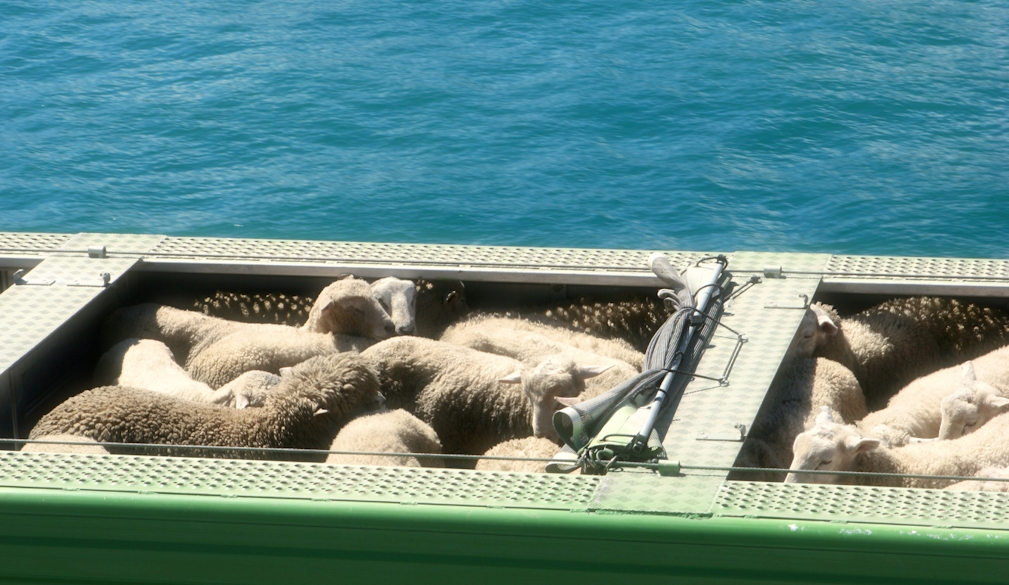

Labor is keeping the live sheep export industry in the dark in 2024, after refusing to release findings of its Independent Panel Report into the consequences of ending the trade.

Leader of The Nationals and Shadow Agriculture Minister David Littleproud said Agriculture Minister Murray Watt had committed to providing more certainty by the end of 2023, but had instead treated Western Australian farmers with contempt by hiding the report in Cabinet.

It comes after a Freedom of Information (FOI) request for a 230-page Independent Panel report into the consequences of phasing out the live sheep trade was denied in 2023, due to Cabinet-in-Confidence.

Mr Littleproud said Labor needed to be transparent about the report in the new year, after a live sheep export phase-out panel travelled around Western Australia but failed to properly consult with the industry.

“I am incredibly disappointed that Labor sees fit to remain secretive about phasing out the live sheep export trade in 2024,” Mr Littleproud said.

“If Agriculture Minister Murray Watt is so confident in his decision to phase out the industry, why won’t he release details of the report?

“Labor is destroying the livelihoods of more than 3000 people who work in the trade and an industry worth $85 million.”

Warranine park farmer Ellen Walker from Brookton, WA, said farmers were worried about 2024.

“We are still in limbo land,” she said.

“We were lucky enough to get some lambs on a boat to Saudi in November but we still have two-year-old wethers waiting for a boat and the price of everything, from mutton to lamb, has fallen. Two years ago it was $200 for ewes and lambs, now I’m lucky to get $100 a head for cross-bred lambs and $40, if I'm lucky, for ewes.

“There is no market for store sheep and to top it off feed prices are ridiculous – oats are now over $500 a tonne, hay is around $300 per tonne and pellets are over $400.”

Farm groups have also written to Minister Watt, pleading for a reversal of the ban, saying the reopening of trade into Saudi Arabia and prevailing market conditions had increased the possibility for east coast exports.

“It is becoming more and more obvious that Labor doesn’t want to release its so-called scientific and economic evidence because it simply doesn’t exist and Labor instead hides behind Cabinet-in-Confidence,” Mr Littleproud said.

“While I am pleased WA Premier Roger Cook is finally standing up for WA farmers and backing the trade, he must now spend 2024 visiting Federal Labor east coast politicians, to ensure they reverse their senseless decision to end live sheep exports.”

Trending Reports

Choosing an A.H. Beard Mattress in Perth: Comfort, Support & Model Guide

Some mattress brands are three years old with a slick website and a manufacturing story that is mostly marketing copy. A.H. Beard is not one of them...

Import Cars From USA To Australia And Japan: Which Option Is Right For You?

Australians love unique vehicles, from classic American muscle cars to high-tech Japanese performance models. If you want to stand out on Aussie roa...

Hormuz is thousands of kilometres away — but Australian farmers are paying attention

A narrow stretch of water between Iran and Oman might appear to have little connection with a wheat farm in Western Australia, a cattle property in ...

How to Keep Your Horse Healthy With the Right Feeding Plan

You've probably heard that nutrition is key to your horse's health, but knowing where to start can feel overwhelming. Between choosing the right hay...

Australia's Road-Travel Boom Is Bringing Money Into Rural Towns

There is a particular sight familiar to almost every Australian country town. The caravan arriving at the service station. Another parked outside ...

RBA holds rates — but rural Australia faces an interest rate problem of its own

  The Reserve Bank has left Australia's cash rate unchanged at 4.35 per cent, avoiding another immediate increase in borrowing costs. For rural Au...

El Niño is back: What Australian farmers should be preparing for

El Niño conditions have returned to the Pacific, putting rainfall, crops, livestock, water supplies and bushfire conditions firmly on the agenda for...

The Iran war reaches the farm gate: what higher fuel and freight costs mean for rural Australia

The war involving Iran may be taking place thousands of kilometres from rural Australia, but its economic consequences can travel remarkably quickly...

Growing Old on the Land: The Unique Challenges Facing Rural Australians

Australia's farming families spend decades building properties, businesses and communities. Many hope to remain on the land for as long as possible...

The Wool Industry: A Cornerstone of Rural Australia

  For more than 200 years, wool has been woven into Australia's economic and cultural story. From the vast Merino stations of the inland to modern ...

Virbac Australia Illuminates Goulburn’s Iconic Big Merino to Launch New Multimin Evolution for Sheep and Backs Local Communities with $2,000 Donation

Virbac Australia Illuminates Goulburn’s Iconic Big Merino Virbac Australia has illuminated Goulburn's iconic Big Merino to celebrate the launch of it...

Can Private Credit Help Australian Agriculture?

Agriculture has always required substantial capital. Farm purchases, irrigation systems, machinery, storage facilities and processing plants all re...